
Not medically reviewed. This guide explains source reading and does not assess treatments.
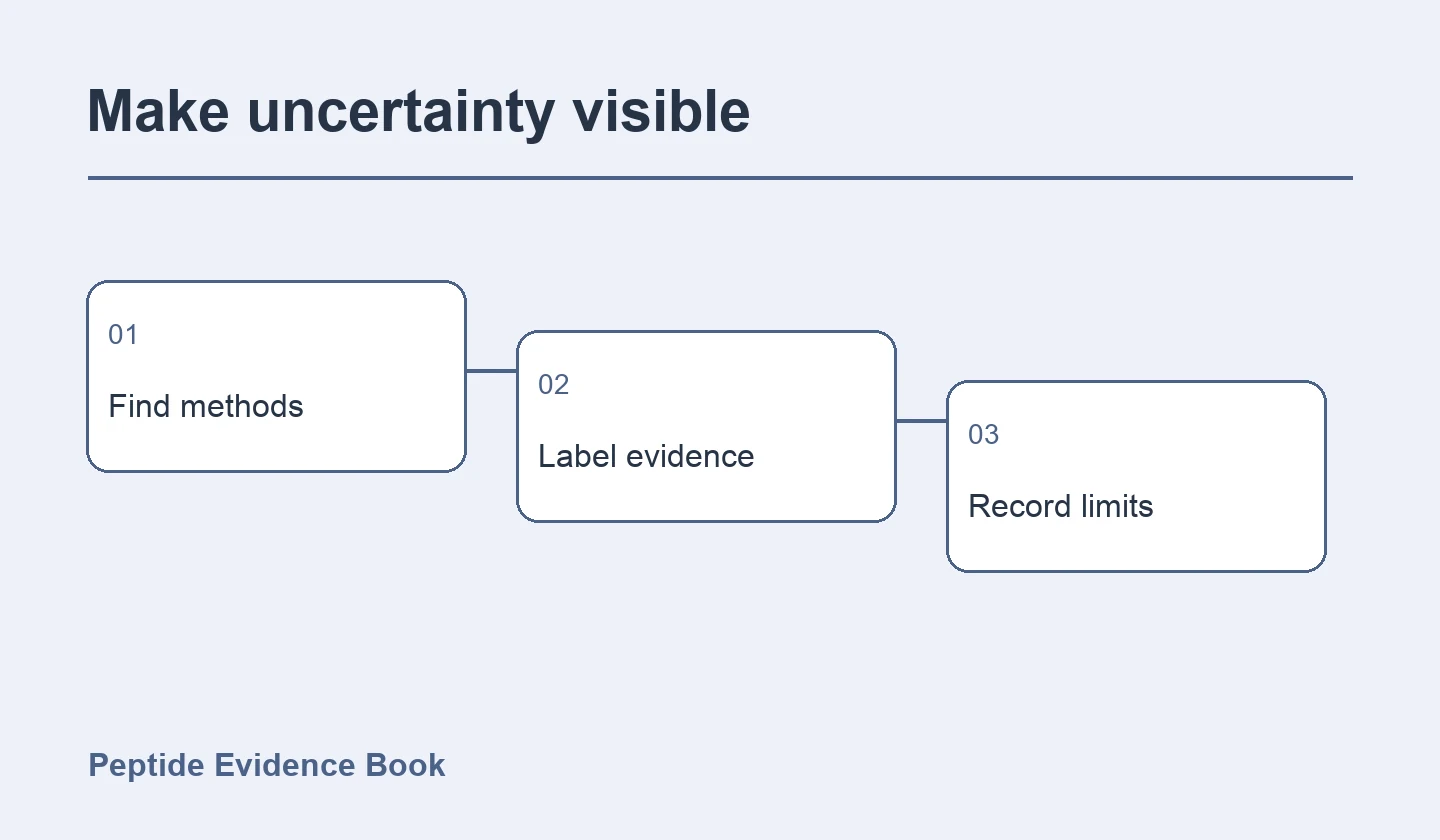
When a peptide claim points to a study, read the methods or the study record to find what was studied. Label the evidence as cell or laboratory work, animal work, a human observational study or a human interventional study as applicable. Then record the outcome the paper measured. Those two fields help you judge what the citation can support.
Identify the study behind the claim
Follow the citation to the actual paper or study record. Note if the source is a review or a report of original data. A review may discuss several kinds of evidence together. Follow its references if you are trying to verify one particular result. The title or the press headline is rarely enough to identify the study design.
Look for a sentence that describes the system, participants or observations in the study. Separate the paper's background discussion about humans from its own methods. A paper may discuss human questions while measuring only a laboratory endpoint. If a summary relies on one result, assign the evidence label to that result, then record where it is described.
Sources: How to read a study record · Protocol registration data element definitions
Read the actual comparison
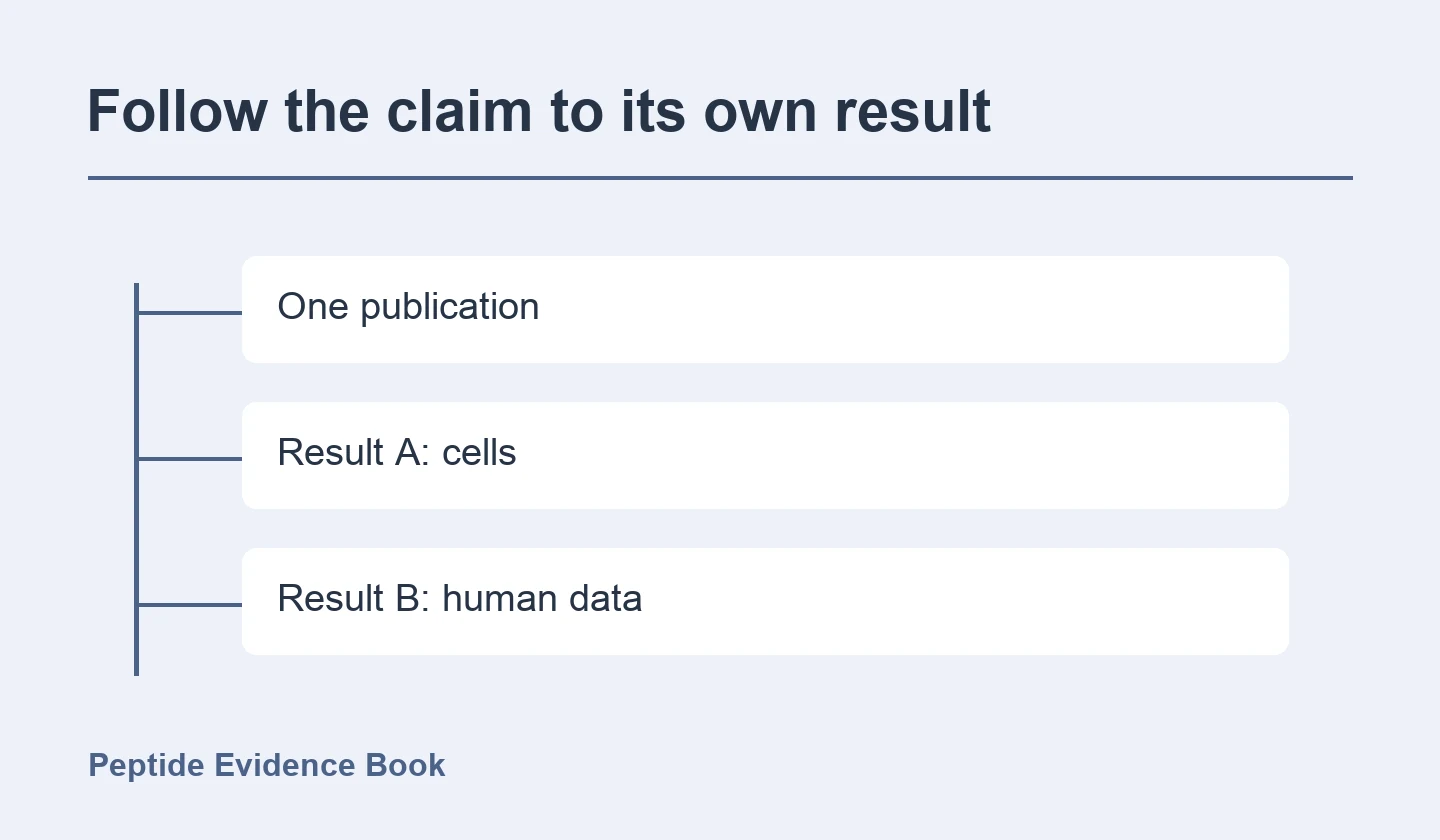
In a fictional example, the methods describe measurements in cultured cells and the results report a change in a laboratory marker. Record “cell study” and name the measured marker as broadly or specifically as the paper permits. Do not turn that result into an observed benefit in people. Imagine the same report also analyzes an association in existing human records. Give that result its own row and specify that the researchers did not assign an intervention. Printing both findings in the same paper does not turn the laboratory result into a human result.
If the research is in humans, look for whether the researchers assigned the intervention or observed what happened without assigning it. ClinicalTrials.gov provides definitions and registration fields for human studies. A registry entry can help identify the intended design and outcomes. Check the actual reported results if you want to know what happened.
Sources: How to read a study record · Protocol registration data element definitions
Attach the endpoint and scope
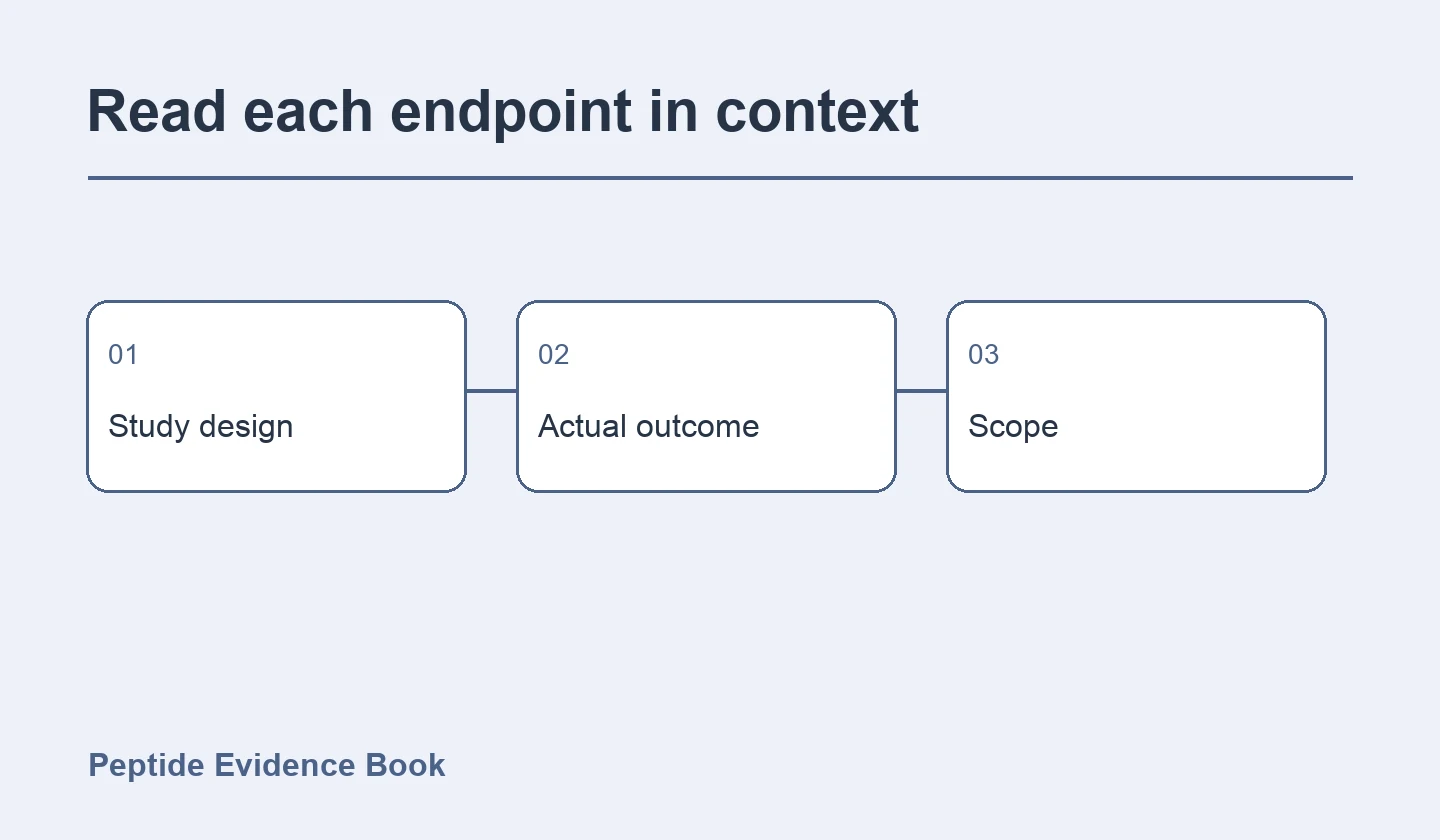
A result on a biomarker and a result on a clinical outcome are different observations. Write the exact category of endpoint and whether the comparison was reported. Keep preliminary or incomplete information visibly marked. A plausible mechanism or promising association can motivate further research without settling a claim about clinical effects.
When the abstract does not give enough detail, write “design unclear from abstract” or “endpoint not specified here.” Use the full methods or another authoritative source before improving that label. An unknown field is more informative than a guessed level of evidence.
| Result | Study type | Endpoint | Write the limitation |
|---|---|---|---|
| Result A | Cultured cells | Laboratory marker | Measured only in cells |
| Result B | Human observation | Measured association | No study-assigned intervention |
| Combined claim | Depends on exact result | Use the original endpoint | Keep the two rows distinct |
Sources: How to read a study record · Protocol registration data element definitions
Keep a source card for each study
Save the citation, the participant or model description, the study design and the endpoint. If the source describes several experiments, use more than one row. Write one sentence about what the source can support and one short note on what remains unanswered. This makes the logic of your evidence review visible.
The card is for reading and discussing research. Medical decisions require separate interpretation of the broader evidence and the circumstances of a given person. The examples on this page use fictional studies so the method does not depend on a product claim.
Before you finish
- Find the methods for each reported result.
- Record the participants or model and endpoint.
- Keep assigned and observed interventions distinct.
- Save each supporting sentence and its limit.
Sources: How to read a study record · Protocol registration data element definitions
Frequently asked questions
Reopen the source and look for the study methods whenever an evidence label seems doubtful. A useful annotation tells readers which comparison supplied the finding and how far that finding can reasonably be carried.
Can one paper include two types of evidence?
Yes. If the methods describe separate experiments or cohorts, label the result from each one separately.
Does a registry entry prove the reported benefit?
The registry often describes the intended design and endpoints. Read the reported results and their scope separately.
Sources: How to read a study record · Protocol registration data element definitions
Keep reading
- Distinguish interventional and observational studies Check whether researchers assigned an intervention or observed the course of events.
- Read the outcome field Give each evidence row its actual endpoint.